Good health involves not just access to healthcare but also access to the right information. Through this page on health education, we hope that we can help you make informed choices for your physical and mental health.
Autism is a developmental problem that affects the way a person communicates and relates to the people and world around them.
It is called a Spectrum Disorder as it can range from a child who does not speak or interact with others at all, to somebody who can speak but does not know how to interact with people.
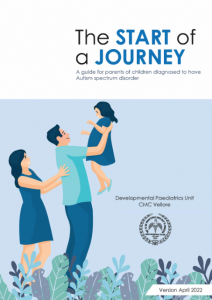
The resources below will help you know more about ASD – the symptoms, causes, features, diagnosis and treatment.
English: PDF, Flipbook
Hindi: PDF, Flipbook
Bengali: PDF, Flipbook
Tamil: PDF, Flipbook, Audio booklet
Blood donation is when a person willingly gives their blood so it can be used to help others. The blood may be used directly in transfusions separated into different parts.
Breastfeeding is one of the most natural and loving ways to care for your baby. It provides all the essential nutrients a baby needs to grow strong and healthy. Mother’s milk is easy to digest and helps protect the baby from various infections and illnesses.
This one-minute video highlights the key benefits of breastfeeding – when to start, how long to continue and so on.
Cervical cancer is cancer that starts in the cells of the cervix. The cervix is the lower, narrow end of the uterus (womb). Cervical cancer usually develops slowly over time. Most cervical cancers are caused by HPV, a sexually transmitted infection.
Cystic Fibrosis (CF) is an inherited disease that affects the lungs and digestive system.
Treatments Given by Non-Medical Professionals (Home Care)
With training and support from the medical team, many daily treatments can be performed at home by patients or their parents/caregivers. These include:
Diabetic retinopathy is a disease of the eye that affects many diabetic patients. It can cause many problems including blurred vision, difficulty seeing colours, and eye floaters. Without treatment, it can also cause loss of vision.
Heatstroke, also called sunstroke, is a dangerous condition that happens when the body gets too hot, above 104°F (40°C). It usually occurs after being in very hot weather for a long time or doing heavy activity in the heat. The very young and the very old are most susceptible to heat strokes.
Hepatitis B is an infection of the liver caused by the Hepatitis B virus. The infection can be acute (short and severe) or chronic (long term).
Read this health education comic about Vidya, a young, pregnant woman, who is diagnosed during a routine checkup.
Hepatitis B can be prevented with a safe and effective vaccine. The vaccine is usually given soon after birth, with boosters a few weeks later. It offers nearly 100% protection against the virus.
Suicide affects individuals, families, and entire communities and its impact can be long-lasting. We can all play a role in helping prevent suicides by:
Last updated on 1 May 2026
HPV vaccination for protection against cervical and various other cancers (Tamil)
Nutritional management of Cystic Fibrosis
Awareness video about Diabetic Retinopathy (Tamil)
Protect yourself from a heat stroke this summer!
If you’re feeling hopeless, it’s ok to ask for help